As a CFO or finance leader at a mid-market company, deciding on your tech stack is not merely a technical choice—it's a strategic business decision. You're balancing growing operational complexity with rising expectations for efficiency, accuracy, and streamlined data management. The critical debate often boils down to whether to choose an all-in-one financial platform or opt for multiple specialized, "best-of-breed" solutions.
Here's a candid breakdown of each approach to guide your decision-making process.
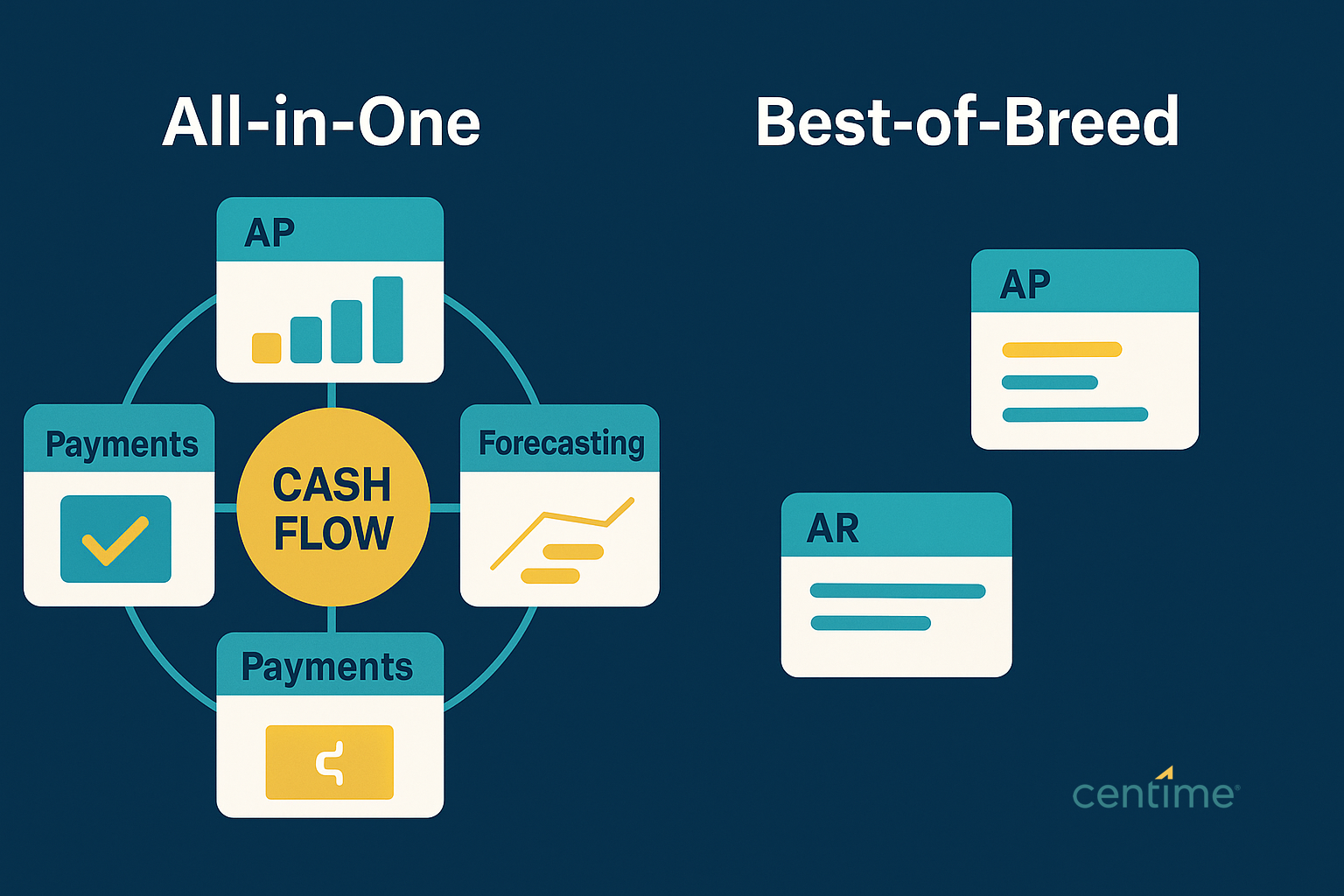
Best-of-Breed: Precision and Performance, but Integration Concerns
Pros:
- Depth of Functionality: Specialized tools excel at their particular tasks. AP automation tools might offer robust AI-driven invoice processing capabilities, while dedicated AR solutions might deliver nuanced customer-level workflows that generic platforms can't match.
- Customized Excellence: Selecting best-of-breed means you pick exactly the tools that fit your specific business processes, often leading to better adoption and performance.
Cons:
- Data Silos: Using multiple distinct tools can create silos. Data consistency, accuracy, and timely integration between platforms (e.g., NetSuite ERP syncing with separate AP and AR tools) become critical challenges.
- Integration Complexity: Connecting disparate systems typically demands more IT resources and can introduce vulnerabilities or operational blind spots.
- Cost and Management Burdens: Managing multiple vendors, contracts, licenses, and integrations significantly increases overhead and often hidden operational costs.
All-in-One: Cohesion and Simplicity, with Key Caveats
Pros:
- Unified Data Flow: Centralized platforms like Centime integrate AP, AR, cash management, forecasting, and reporting seamlessly. Data flows smoothly between modules, significantly improving accuracy and visibility.
- Easier Maintenance and Management: Single-vendor management simplifies procurement, support, and updates, freeing CFOs and finance teams to focus on strategic objectives.
- Cost-Efficient: Consolidating solutions generally reduces total cost of ownership (TCO), cutting down expenses on integration, vendor management, and overlapping functionality.
Cons:
- Potential Functional Gaps: Some all-in-one platforms offer broad coverage but might lack advanced functionality in specialized areas, potentially requiring supplemental tools for critical needs.
- Vendor Dependency: Dependence on a single vendor raises stakes if service quality or innovation stagnates.
See Centime in action
Our innovative AR, AP and business banking solutions are powerful alone, and even better together.
Schedule a tailored demo with a Centime expert.
Tackling Tech Fatigue with Strategic Consolidation
Mid-market finance leaders increasingly feel overwhelmed by managing multiple technologies. According to a recent study, 34% of mid-market CFOs are considering job changes primarily due to workload management struggles related to tech stack complexity. Consolidating your financial tech stack can significantly reduce this fatigue, allowing your team to spend less time troubleshooting integrations and more time driving strategic insights.
How to Evaluate What's Right for Your Business
Determining the best fit requires careful consideration across several dimensions:
- Scalability: Can your chosen solution grow and adapt with your business without incurring costly migrations?
- Integration Capabilities: If opting for best-of-breed, can each solution reliably integrate with your core systems like NetSuite or Sage Intacct?
- User Experience (UX): Is the software intuitive enough for your team to adopt and leverage fully without extensive training or ongoing support?
- Total Cost of Ownership (TCO): Look beyond licensing fees to hidden costs associated with management, integration, upgrades, and support.
Why All-in-One Can Be a Strategic Advantage (When Done Right)
The all-in-one approach, particularly when executed thoughtfully by a vendor attuned to mid-market business needs, can offer compelling advantages. For instance, Centime's Finance Automation Suite demonstrates the best-case scenario: it provides robust, deeply integrated modules for AP, AR, cash forecasting, and banking, specifically designed to meet mid-market complexities. It's the epitome of strategic simplicity, combining functionality depth typically associated with best-of-breed solutions into a cohesive, user-friendly interface.
Your Next Steps
Ultimately, choosing between an all-in-one and a best-of-breed solution depends on your unique business context and strategic objectives. Carefully evaluate the functionality, integration capabilities, long-term costs, and scalability. Consider requesting demos or consultations from trusted vendors.
If reducing complexity and enhancing strategic financial insight sounds appealing, see firsthand how Centime’s integrated platform can simplify your finance stack.
See Centime in action
Our innovative AR, AP and business banking solutions are powerful alone, and even better together.
Schedule a tailored demo with a Centime expert.