
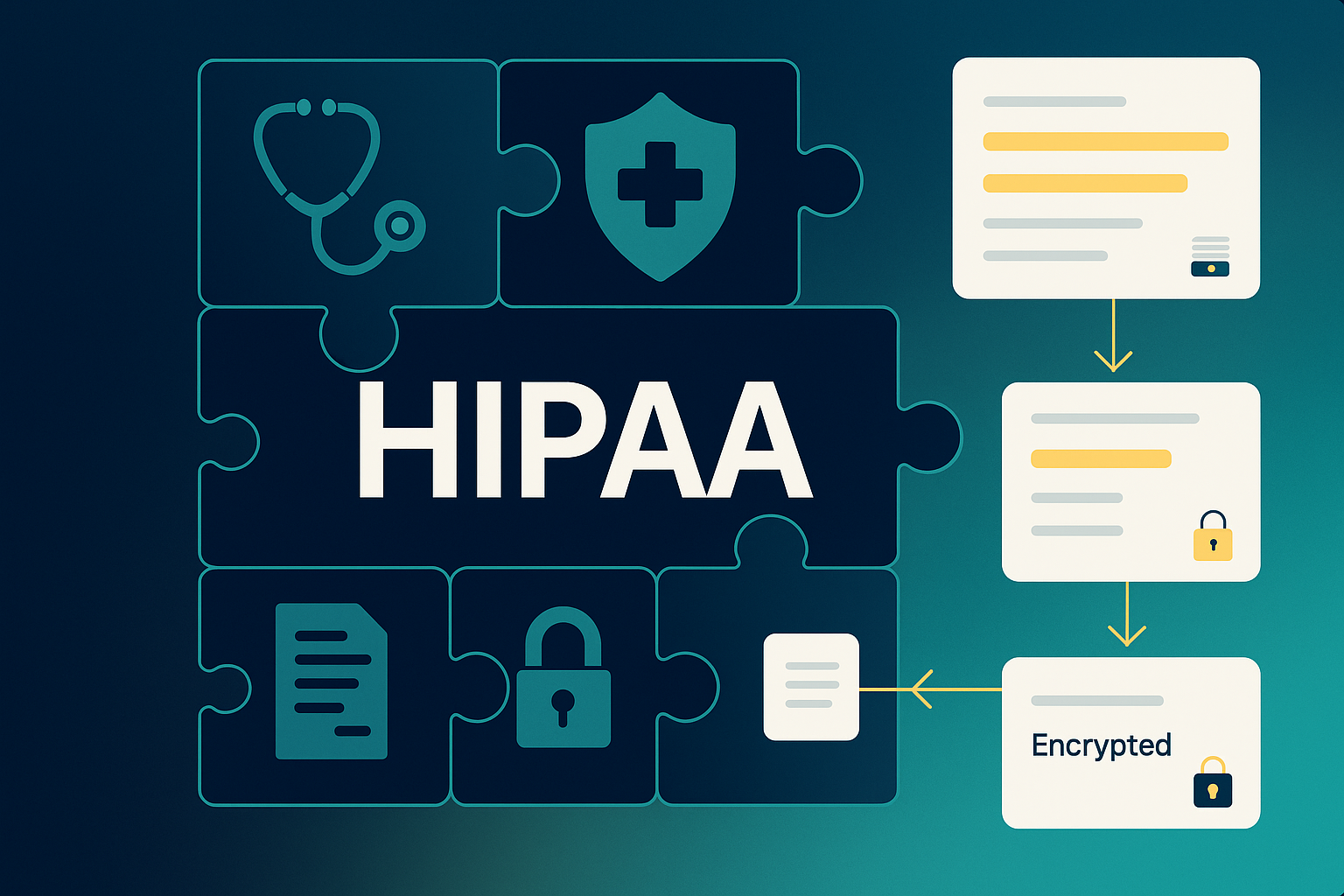
There’s a strange irony in healthcare finance: the data that’s the most sensitive is often tucked away in the least protected place — the invoice description line. That’s where you’ll see the patient’s name, a treatment code, or some other Protected Health Information (PHI) that should never, ever slip into the wrong hands.
Anyone who’s worked in AP for a healthcare business knows the drill. You build workarounds. You redact PDFs. You cross your fingers that the right people see what they need, and the wrong people don’t. It’s tedious, it’s brittle, and it doesn’t scale.
Centime’s September release changes that equation by making HIPAA compliance the default state of invoice automation, not an extra step.
See Centime in action
Our innovative AR, AP and business banking solutions are powerful alone, and even better together.
Schedule a tailored demo with a Centime expert.
The Problem Nobody Talks About
AP staff in healthcare aren’t usually trained in HIPAA nuance. They’re trained to get invoices in, coded, approved, and paid. The compliance exposure comes not from negligence, but from normal workflows — invoices sitting in shared queues, descriptions visible in ERP exports, or attachments floating around email threads.
This is how violations happen. Quietly. Accidentally. Expensively.
What Centime Changed
Instead of bolting on manual controls, PHI is now encrypted and masked automatically inside Centime. Unless you’ve been granted the “view PHI” entitlement, you’ll never even see the sensitive data. To most users, the Description field looks blanked out — business as usual, but safer.
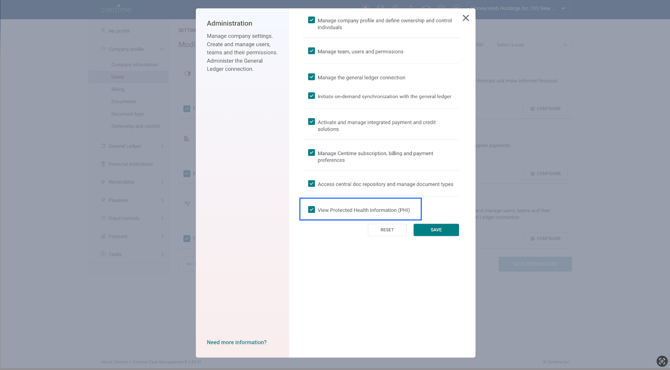
For compliance officers or finance leaders with clearance, PHI is still visible when it needs to be. They can unmask it securely within the workflow, without slowing down invoice processing.

The real shift is psychological: AP teams no longer have to “remember” compliance, because the system enforces it invisibly.
Why It’s a Bigger Deal Than Just “Checking the Box”
Plenty of software vendors claim “HIPAA compliance.” What makes this meaningful is how it threads the needle between compliance and efficiency. You don’t need two systems (one for AP, one for HIPAA). You don’t need staff redacting PDFs. You don’t need to compromise speed for safety.
The compliance is woven into the workflow itself.
Final Thought
If you’re in healthcare finance, you know that every audit feels like a stress test of your processes. With this release, at least one pressure point is off the table. PHI stays protected. AP keeps moving. And you stop holding your breath every time someone says, “We’ll need to see your invoice workflows.”