
.png)
Your controller sends you a screenshot at 4:47 PM. Three purchase orders are stuck in limbo because someone forgot to mark items received. The vendor invoice arrived two days ago, your accounts payable team can't match it to anything, and now you're staring down late payment fees on a $47,000 order.
This happens because NetSuite's dropship workflow assumes your business operates in a vacuum where vendors ship exactly what you ordered, invoices arrive the same day as the goods, and someone always remembers to click "receive" before going home for the day.
Reality works quite differently.
See Centime in action
Our innovative AR, AP and business banking solutions are powerful alone, and even better together.
Schedule a tailored demo with a Centime expert.
The True Complexity of Dropship Workflows
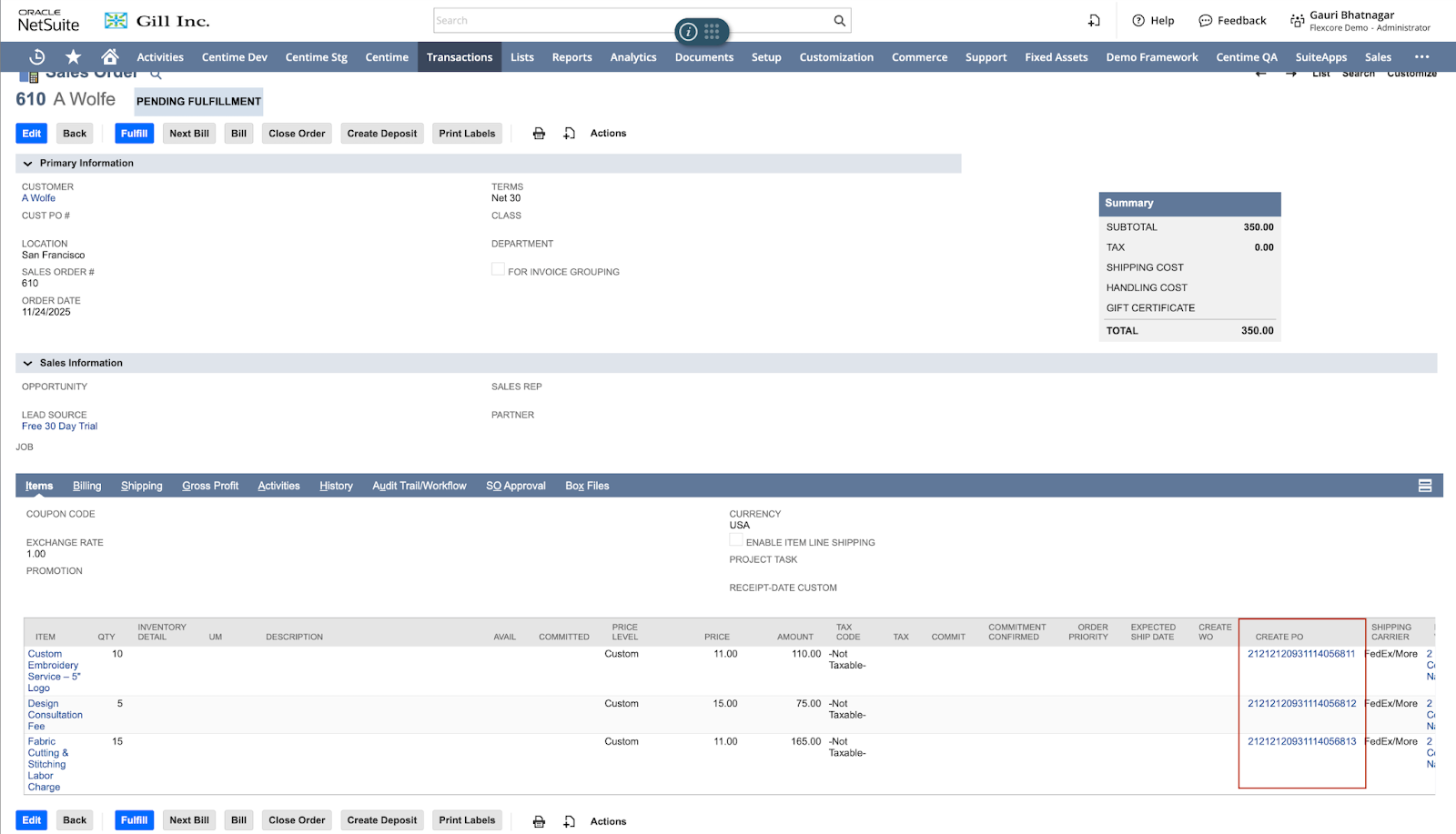
When you configure items as dropship or non-inventory resale in NetSuite, the system creates linked transactions between sales orders and purchase orders automatically. On paper, this sounds efficient. A customer orders something you don't stock, NetSuite generates a PO to your supplier, the supplier ships directly to your customer, and everyone moves on.
But here's what actually happens: your sales order creates a PO. That PO sits waiting for someone to manually mark it as received. Without that receiving step, you can't properly bill the PO. When the vendor invoice arrives in your inbox, your AP team has to hunt through NetSuite to find the corresponding PO, verify the line items match (they rarely do perfectly), and then manually create the bill.
According to NetSuite documentation, effective procurement requires connecting purchasing to finance, inventory, and real-time operational data. But NetSuite's native dropship functionality stops short of true automation, leaving critical steps dependent on manual intervention.
Why Three-Way Matching Matters More Than You Think
Three-way matching verifies that your purchase order, goods receipt, and vendor invoice all align before you pay. Research shows that invoice fraud costs companies an average of $133,000 per incident, and three-way matching serves as your first line of defense.
The challenge with dropship items is that you're matching documents across a transaction you never physically touched. Your warehouse didn't receive the goods. Your customer did. This creates gaps where discrepancies hide: wrong quantities shipped, pricing changes not communicated, partial fulfillments that don't match the original PO.
NetSuite requires you to manually receive the sales order or PO to complete the workflow. Miss that step, and your entire matching process falls apart. Your AP team ends up manually reconciling invoices against POs while trying to remember which items were actually delivered three weeks ago.
See Centime in action
Our innovative AR, AP and business banking solutions are powerful alone, and even better together.
Schedule a tailored demo with a Centime expert.
Where Automation Should Start (But Usually Doesn't)
The workflow outlined in the Centime Knowledge Base article demonstrates what proper dropship automation looks like:
- Sales order creation automatically generates the PO
- Item fulfillment happens with proper GL tracking
- Invoice upload triggers automatic PO linking
- Line-level matching compares invoice details to PO data
- Bill posting closes out the PO completely
The critical difference is in step three and four. When you upload an invoice to Centime, the system immediately links it to the relevant POs and performs line-item matching automatically. No hunting through transaction lists or manual cross-referencing between screens. The matching happens in seconds, flagging discrepancies for review while auto-approving clean matches.
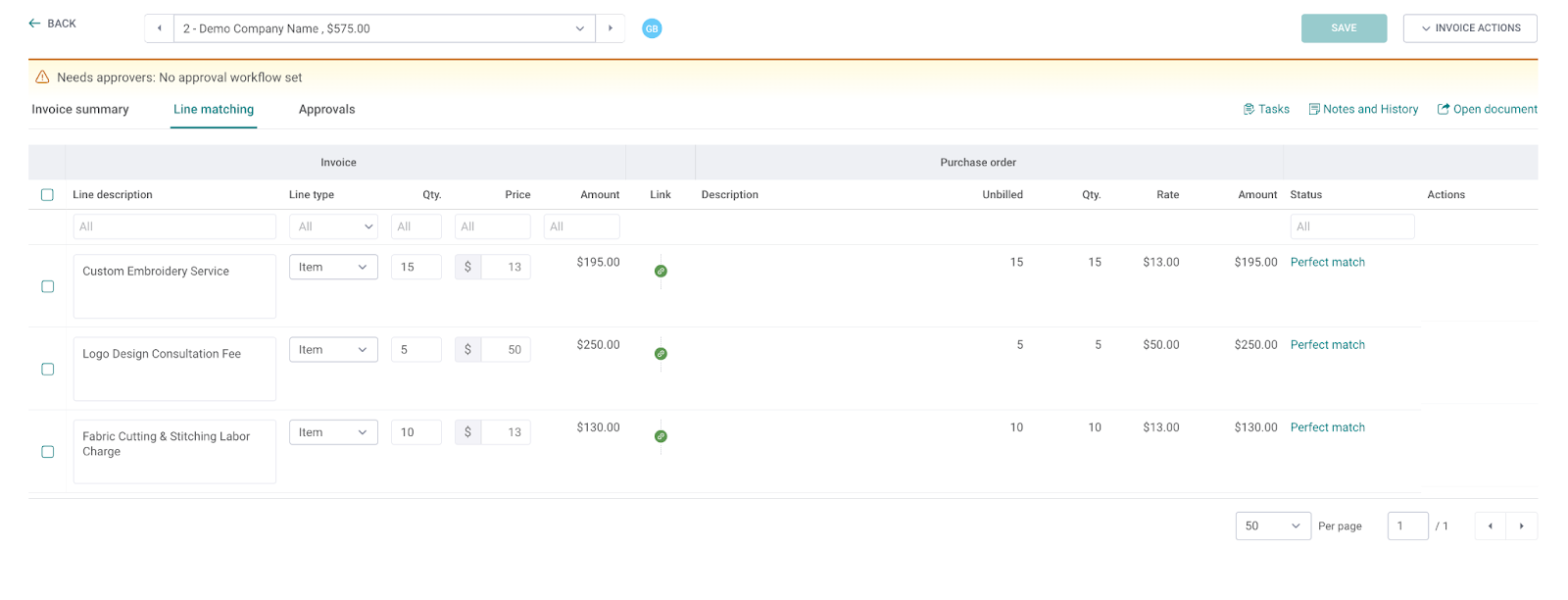
This matters because dropship automation eliminates manual order routing, inventory updates, and tracking imports that typically consume hours of staff time. But only if the automation extends through the entire workflow, including invoice matching and bill creation.
The Cost of Manual Dropship Processing
A manufacturing company processing 200 dropship POs monthly spends roughly 15 minutes per transaction on manual receiving, invoice matching, and bill creation. That's 50 hours of labor monthly, not counting the time spent resolving exceptions, tracking down missing information, or fixing errors from fatigue and repetition.
More expensive than the labor hours are the operational costs: late payment fees because invoices sit waiting for someone to match them, strained vendor relationships from payment delays, and the opportunity cost of having skilled finance professionals manually entering data instead of analyzing it.
Centime's embedded NetSuite integration eliminates these manual touchpoints. The platform lives inside NetSuite rather than operating as an external system that requires constant syncing. When an invoice arrives, Centime already knows about the corresponding POs because it's pulling directly from the same database your sales orders created them in.
See Centime in action
Our innovative AR, AP and business banking solutions are powerful alone, and even better together.
Schedule a tailored demo with a Centime expert.
What Proper Item Configuration Actually Enables
The article's section on NetSuite setup focuses on item configuration for a reason. When items are properly set up as dropship or non-inventory resale with accurate supplier information, NetSuite can auto-generate POs. But that's only half the battle.
Centime reads those same item configurations to understand:
- Which suppliers should receive POs for which items
- Expected pricing and terms for line-level matching
- GL account coding for automatic categorization
- Approval routing based on item type and value
This means the intelligence you build into your NetSuite item master doesn't just create POs—it drives the entire procure-to-pay workflow through to final payment without manual intervention at each step.
The Embedded Advantage
Most AP automation platforms sit outside your ERP, requiring constant data synchronization and creating a separate system your team needs to learn and manage. Centime takes a different approach.
As a Built for NetSuite SuiteApp, Centime operates inside NetSuite's interface. Your AP team works in the same environment they already know, with Centime's automation invisibly handling the matching, coding, and workflow routing in the background.
This embedded architecture means:
- Real-time data access without sync delays
- No separate login or system to manage
- Approval workflows that respect your existing NetSuite permissions
- GL postings that happen instantly without batch processing
When a PO gets fully billed in Centime, it immediately reflects in your NetSuite purchase order list. No waiting for nightly syncs. No reconciling discrepancies between systems.
See Centime in action
Our innovative AR, AP and business banking solutions are powerful alone, and even better together.
Schedule a tailored demo with a Centime expert.
Moving Beyond Basic Automation
The workflow documented in the Centime article represents the foundation: automated PO matching, bill creation, and GL posting for dropship and resale items. But companies using Centime typically extend this automation further.
They connect vendor portals so suppliers can track invoice and payment status without emailing your AP team. They implement approval routing that escalates exceptions automatically while processing standard invoices without human review. They use the same platform for accounts receivable, creating complete working capital visibility instead of managing separate systems for payables and receivables.
This matters because dropship workflows don't exist in isolation. That same customer ordering dropship items probably also receives direct shipments from your warehouse, services from your team, and potentially products from your retail locations. Managing each transaction type in a different system fragments your financial data and creates reconciliation nightmares.
What This Means for Your Finance Team
If you're processing dropship or non-inventory resale items through NetSuite right now, ask yourself: how many times does someone touch each invoice before it gets paid?
Most companies answer "four to seven times"—receiving, initial invoice review, PO matching, coding verification, approval routing, bill entry, and payment processing. Each touchpoint introduces delay and error risk.
Proper automation collapses these touchpoints to one: exception review. Your AP team sees invoices that don't match cleanly and makes judgment calls on whether to approve them anyway or send them back to the vendor. Everything else processes automatically.
That shift lets finance teams focus on what actually matters: vendor relationship management, working capital optimization, fraud detection, and strategic analysis. Not data entry and document matching.
Implementation Reality
The documented workflow in the Centime article works because it builds on NetSuite's existing dropship functionality rather than replacing it. Your item master stays in NetSuite. Your sales orders and POs stay in NetSuite. Your GL and financial reporting stay in NetSuite.
Centime adds the automation layer that NetSuite's native tools can't provide: intelligent invoice capture, automated line-item matching, workflow routing, and payment processing. According to customer testimonials, companies typically go live in 7-21 days because there's no complex integration project—the SuiteApp architecture handles the technical connection while your team focuses on configuring approval workflows and payment methods.
This speed matters when you're bleeding time and money on manual dropship processing. Waiting months for a traditional AP automation implementation means continuing to pay late fees, frustrate vendors, and waste staff capacity while you wait for the solution to arrive.
Ready to Fix Your Dropship Workflow?
If you're already a Centime customer and want to optimize your dropship and resale item processing, reach out to your Customer Success Manager. They can review your current NetSuite configuration and help implement the automated workflow documented in this article.
Not a Centime customer yet? Schedule a demo to see how embedded AP automation eliminates manual touchpoints in your dropship workflow while maintaining complete control and visibility inside NetSuite. We'll show you exactly how invoice matching, PO linking, and automated bill creation work with your specific item types and supplier relationships.